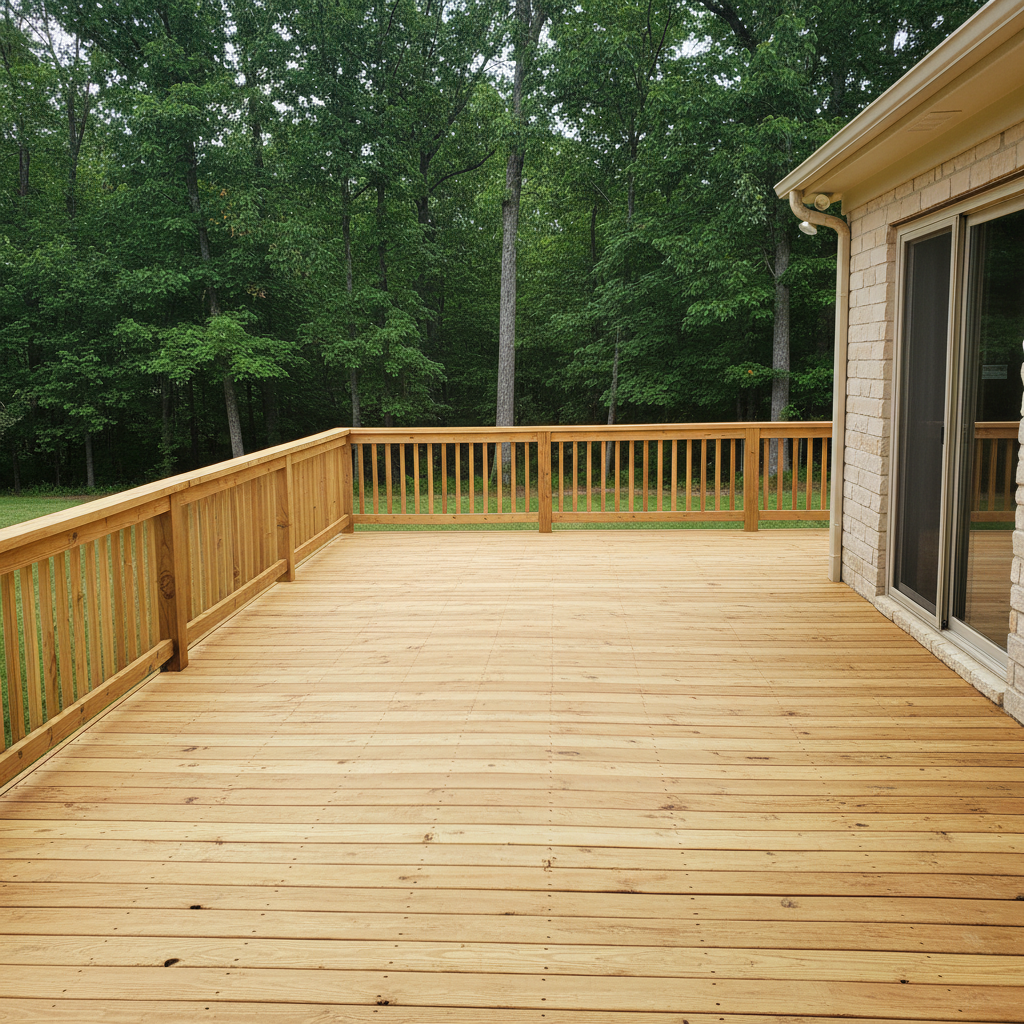
Ever notice how fast the humidity around Tellico Lake and the Tennessee River can test outdoor wood? If you built a deck around here recently, you already know our climate is very demanding. Between the heavy summer downpours, the sticky humidity, and the occasional freeze in January, your outdoor space takes a serious beating year-round.
Keeping that wood or composite surface from turning into a spongy mess is not rocket science, but it does take a little consistency. Here is what Mighty Decking tells homeowners across Loudon when they ask how to keep their outdoor living areas standing strong for 15 to 20 years or more.
What Regular Maintenance Actually Looks Like
Homeowners do not need to spend every weekend scrubbing boards, but ignoring your Deck completely is a fast track to a premature replacement. Start with a simple seasonal wash. Spring pollen coats everything around here thick enough to cause problems, so a gentle rinse with a garden hose and a soft brush goes a long way. Do not blast your Deck with a high-pressure washer unless you want to fuzz up the grain and ruin the wood fibers.
Keep leaves and pine needles cleared out from the gaps between your Deck boards. When organic debris packs in there, it holds moisture against the joists and speeds up rot right where you cannot see it. If you have got a traditional wood build, check the finish every couple of years. If water stops beading up and starts soaking straight into the grain, it is time to clean the Deck and roll on a fresh coat of stain or sealer.
Warning Signs of Structural Trouble
Most minor wear and tear is easy to fix, but you need to catch the big stuff before it becomes a safety hazard. Walk your Deck a couple of times a year and keep your eyes peeled for these red flags:
- Fasteners that are popping up or showing rust stains around the screw heads.
- Soft spots in the wood, especially near post bases, ledger boards attached to the house, and stair treads.
- Railings that wobble when you lean on them.
- Boards that cup, warp, or split wide open under the East Tennessee sun.
- Green algae growth taking over shady corners after a wet spell.
If a ledger board starts pulling away from your house even a fraction of an inch, stop using the Deck immediately. That is the backbone of your entire structure.
Extending the Life of Your Build
A little preventative care goes a long way out here in Loudon County. Make sure your gutters are not dumping water right onto the edge of your framing. If you are due for a new Deck build or major repairs, talk to us at Mighty Decking about flashing details and hidden fastener systems that keep moisture out of the vulnerable spots.
Trim back tree branches that hang too low over your Deck. Getting more sunlight across the surface after a rainstorm helps the Deck boards dry out faster, which stops mold and mildew from taking over.
When to Call a Professional
Some jobs are easy Saturday DIY projects, but others require a trained eye and proper tools. If you notice structural sagging, major ledger board separation, or rot that goes deeper than the surface boards, do not try to prop it up with a couple of 2x4s from the hardware store. Mighty Decking builds these structures every day to evaluate the framing and keep your family safe in Loudon, Tennessee.